MOTORIZED SOLAR SHADES
Control the Sun.
Keep the View.
Manage direct sunlight and distracting glare without unnecessarily closing off your surroundings.
Motorized solar shades combine specialized screen fabrics with convenient automation to support comfortable, naturally illuminated spaces.
MOTORIZED SOLAR SHADES
What Are Motorized Solar Shades?
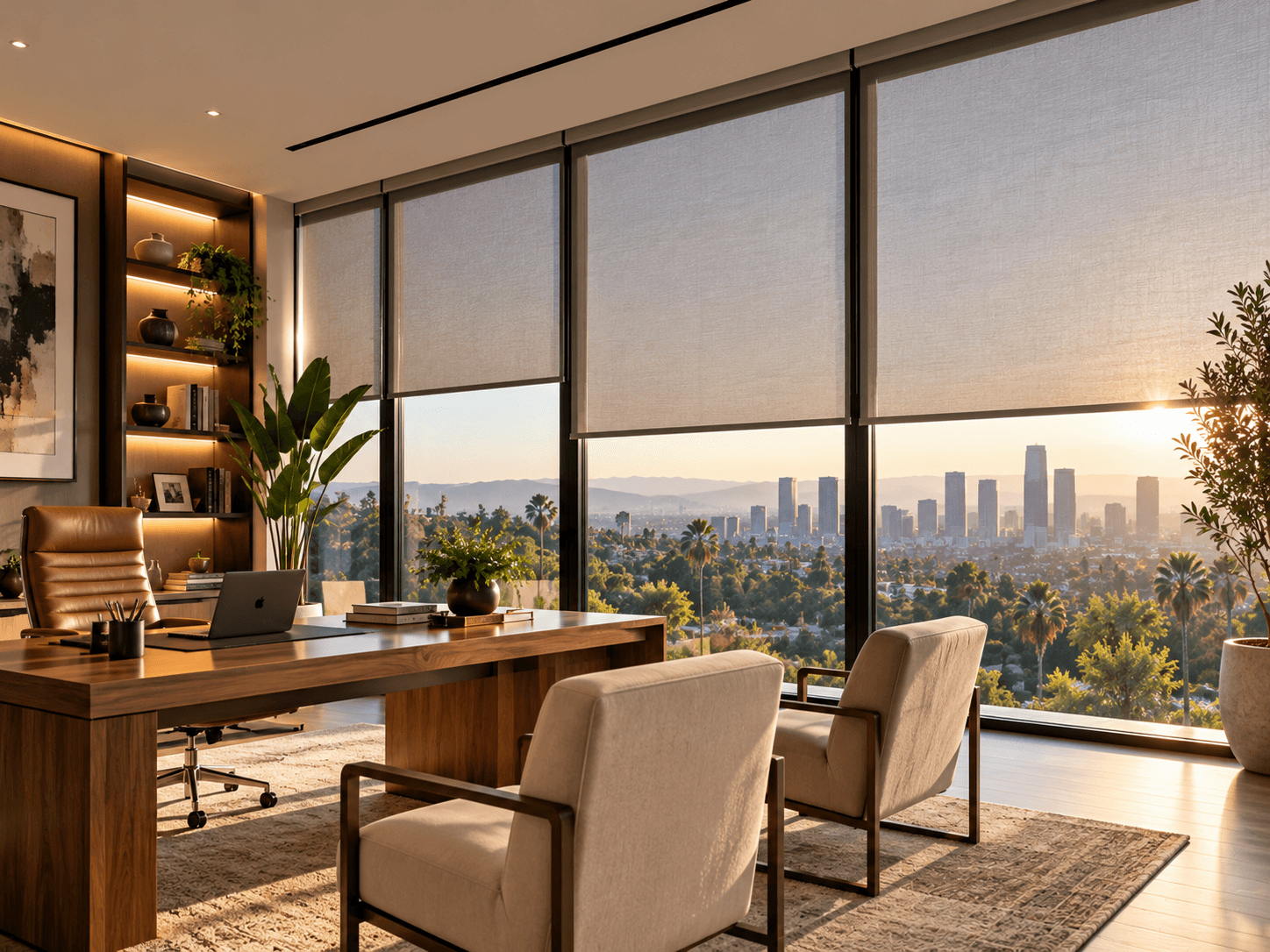
Solar shades are constructed using woven screen fabrics designed to moderate sunlight and glare while preserving outward visibility. Unlike opaque window coverings, solar screen materials allow varying degrees of natural light to pass through while reducing direct solar intensity.
The key specification of a solar shade fabric is its openness factor, which describes the percentage of open space in the weave. Lower openness factors block more light and reduce view-through, while higher openness factors allow more natural light and preserve greater outward visibility.
Motorized operation adds the convenience of scheduled positioning, group coordination, and remote control, allowing solar shades to adjust throughout the day as sunlight conditions change.
SOLAR SHADES
Designed for Everyday Comfort & Control.
Screen Glare Management
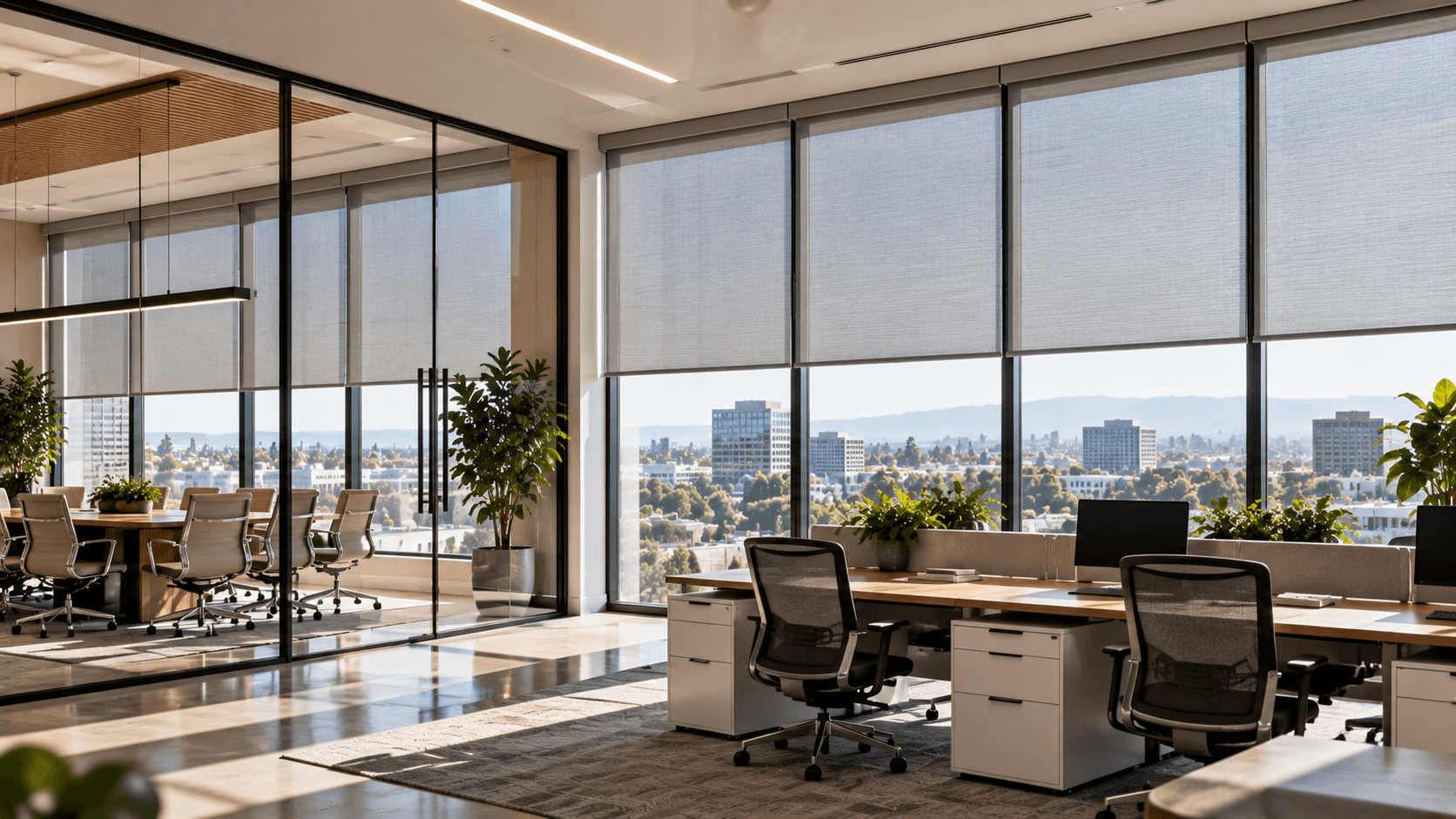
Help reduce direct light and reflections on computer monitors, television screens, and work surfaces by installing appropriately rated solar shade fabrics.
Outdoor View Preservation
Selected solar fabrics allow varying degrees of outward visibility while managing incoming sunlight. Higher openness levels preserve more of the outdoor view.
Solar Exposure Management
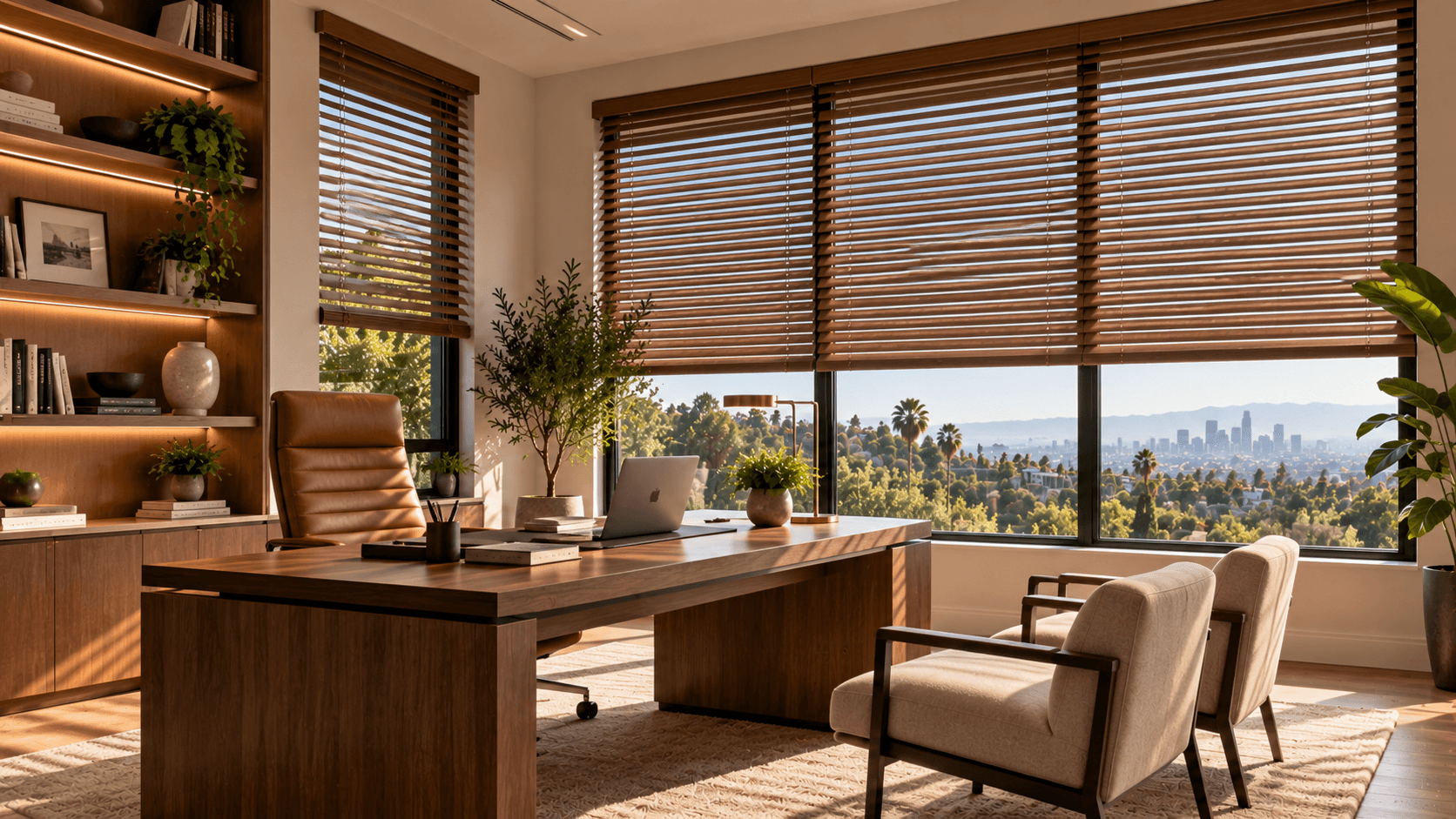
Moderate direct sunlight entering interior spaces during peak hours. Program shades to lower when sunlight is most intense and retract during gentler light conditions.
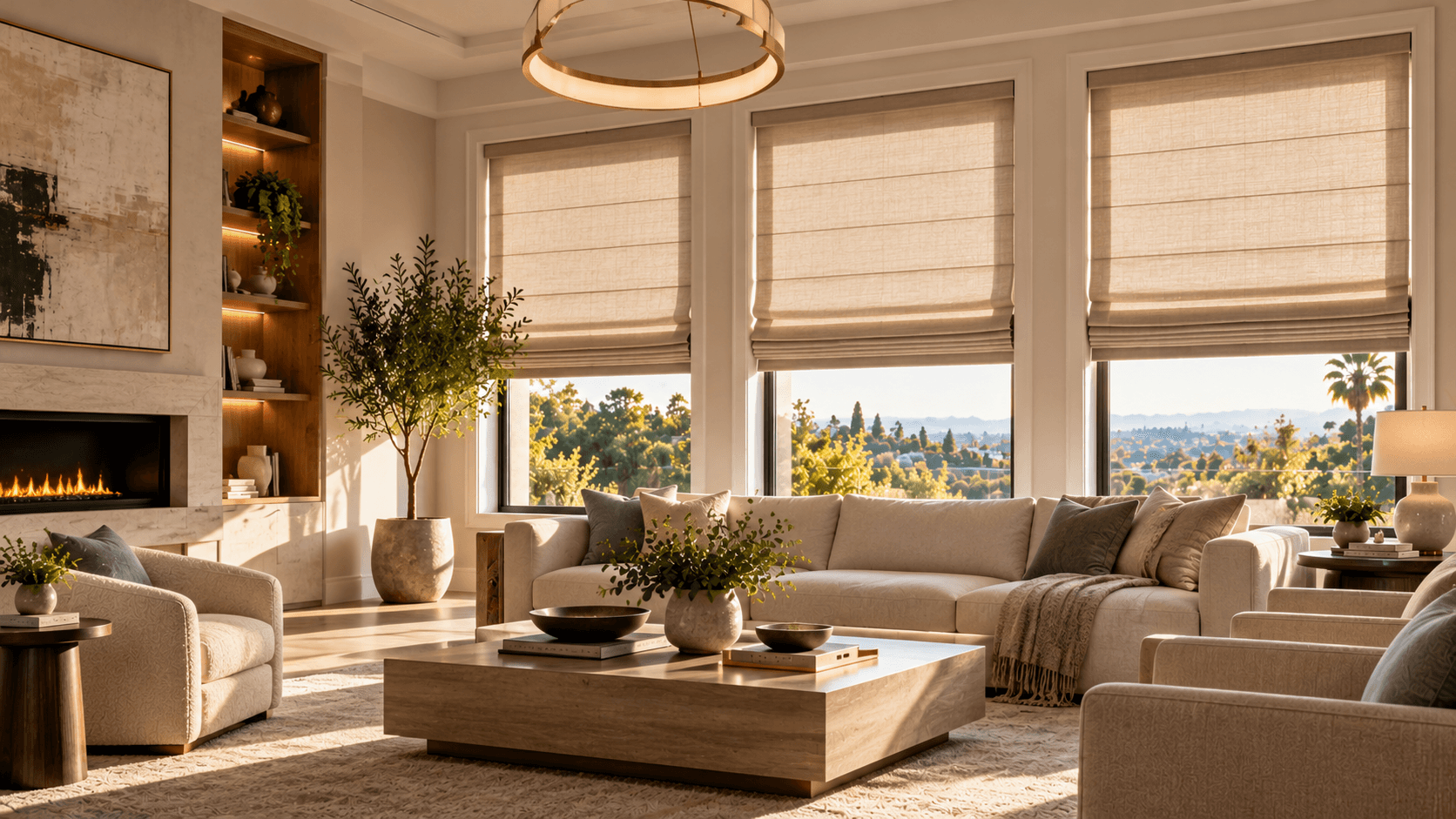
Convenient Daily Adjustment
Program shade positions around changing sunlight conditions throughout the day. Schedule morning opening, midday protection, and evening retraction automatically.
CONSTRUCTION & OPERATION
Construction & Operating Principles
Solar shades share the same basic roller mechanism as conventional roller shades, with the critical difference being the woven screen fabric. The fabric is specially engineered with calculated openness levels to balance light transmission, glare reduction, and outward visibility.
The screen fabric wraps around a roller tube and is tensioned by a bottom bar. Compatible motors rotate the tube to raise or lower the shade. The choice of openness factor directly affects the shade's solar performance, interior brightness, and ability to see through from inside.
Fabric selection is the most consequential decision in solar shade specification. A lower openness factor provides greater glare reduction and reduced solar heat transmission but also reduces outward visibility. A higher openness factor preserves more natural light and view clarity.
Fabrics, Openness & Solar Performance
Solar shade fabrics are available in a range of colors, weave patterns, and openness factors. Lighter fabric colors reflect more sunlight, while darker colors absorb more heat and provide enhanced view-through. The openness factor determines the balance between light filtration and outward visibility.
Daytime privacy can be provided by certain fabrics and openness configurations, but nighttime privacy should not be assumed. When interior lights are on and the exterior is dark, solar screen fabrics become more transparent from the outside. Homeowners should evaluate privacy requirements with their design consultant before finalizing fabric selection.
Motorization & Intelligent Automation
Compatible motorization options allow you to operate your solar shades with the touch of a button, on a schedule, or as part of a broader smart-home routine.
Morning Positioning
Program solar shades to retract during morning hours when sunlight is less intense, preserving natural light and outward views.
Afternoon Sun Management
Lower shades automatically during peak sunlight hours to help manage glare and interior brightness.
Evening Retraction
Schedule shades to open in the evening when direct sunlight has passed, restoring unobstructed views.
Environmental Triggers
Where supported, use compatible light or temperature sensors to trigger shade adjustments based on changing conditions.
SMART HOME INTEGRATION
Connected Control for Modern Living.
Solar Shades can work alongside compatible smart-home systems, providing convenient control through wall interfaces, mobile devices, voice assistants, and programmed automation.
Wall Controls & Remotes
Operate solar shades conveniently from wall keypads, handheld remotes, or compatible automation interfaces.
Smartphone & Tablet
Adjust shade positions from supported mobile devices, whether at home or away.
Voice Assistants
Use compatible voice commands to adjust solar shades without interrupting activities.
Smart-Home Scenes
Include solar shades in compatible scenes that coordinate lighting, climate, and window coverings.
Ideal Rooms & Applications
Solar Shades are well suited for the following environments. The appropriate product configuration depends on window dimensions, sunlight exposure, and the room's specific requirements.
Home Offices
Solar shades are well suited for home offices where screen glare from direct sunlight can affect productivity. Appropriate openness factors reduce reflections while maintaining natural light.
Living Rooms with Views
Preserve scenic outlooks while managing intense sunlight. Higher openness fabrics allow views to remain visible while reducing glare.
Dining Rooms
Manage afternoon sunlight in dining areas during midday and early afternoon hours when direct sun is strongest.
Sun-Exposed Windows
Windows facing south, west, or unobstructed skylines receive the most direct sunlight. Solar shades are appropriate for managing exposure in these orientations.
Planning, Measurements & Professional Installation
01
Window & Sunlight Assessment
Evaluate window orientation, daily sunlight patterns, and the room's typical use to determine appropriate openness factors and motorization requirements.
02
Fabric & System Selection
Select the solar screen fabric based on openness factor, color, weave, and light-management goals. Configure the motorization approach for the specific installation.
03
Professional Installation & Calibration
Mount the headrail, install motor and wiring, and program shade limits, group assignments, and any sun-positioning schedules.
04
Testing & Demonstration
Verify smooth fabric operation, confirm programmed positioning, demonstrate control interfaces, and review daytime and nighttime privacy considerations.
Explore More Motorized Window Treatments
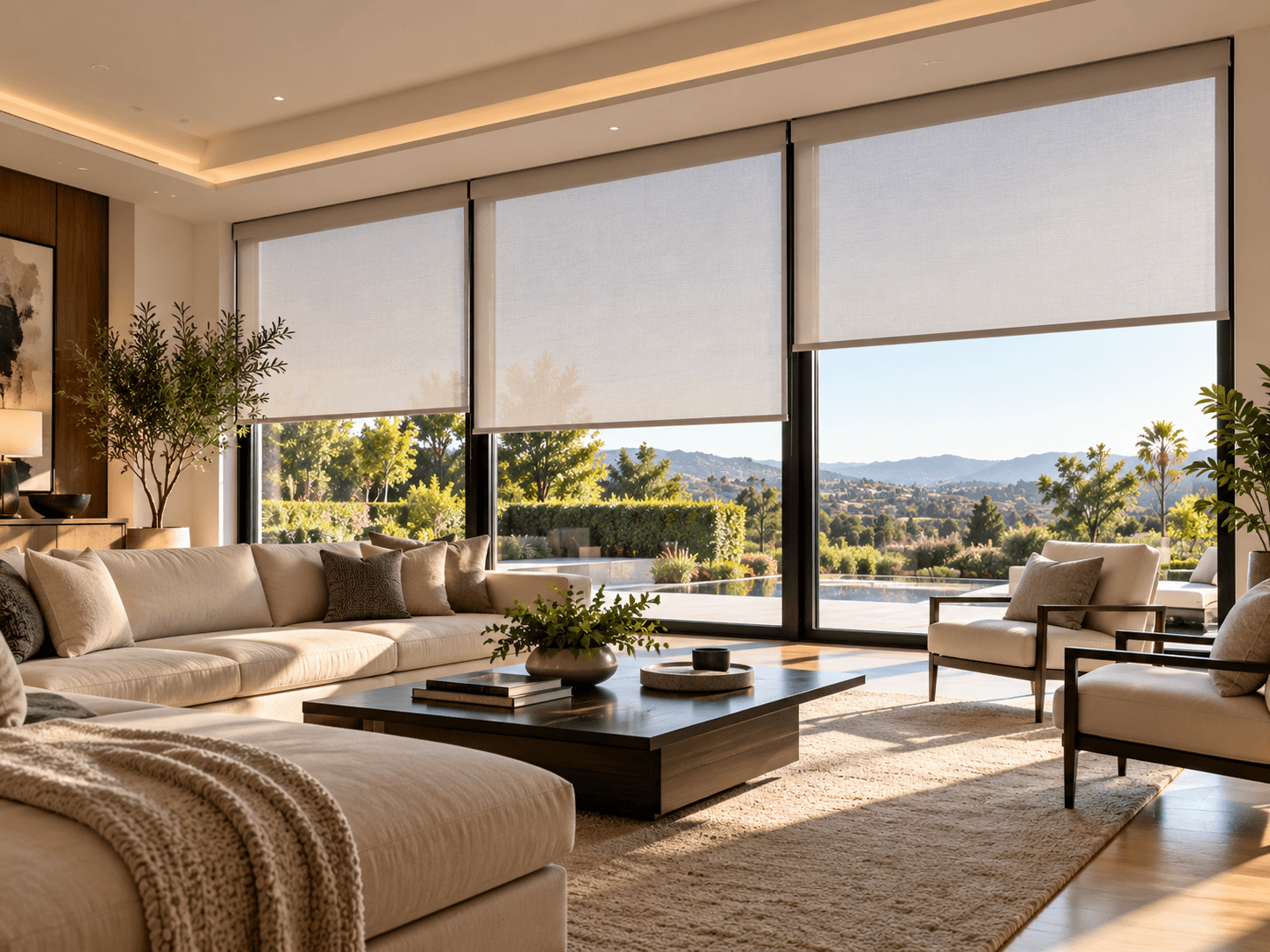
Roller Shades
Clean, contemporary shading with smooth motorized control.
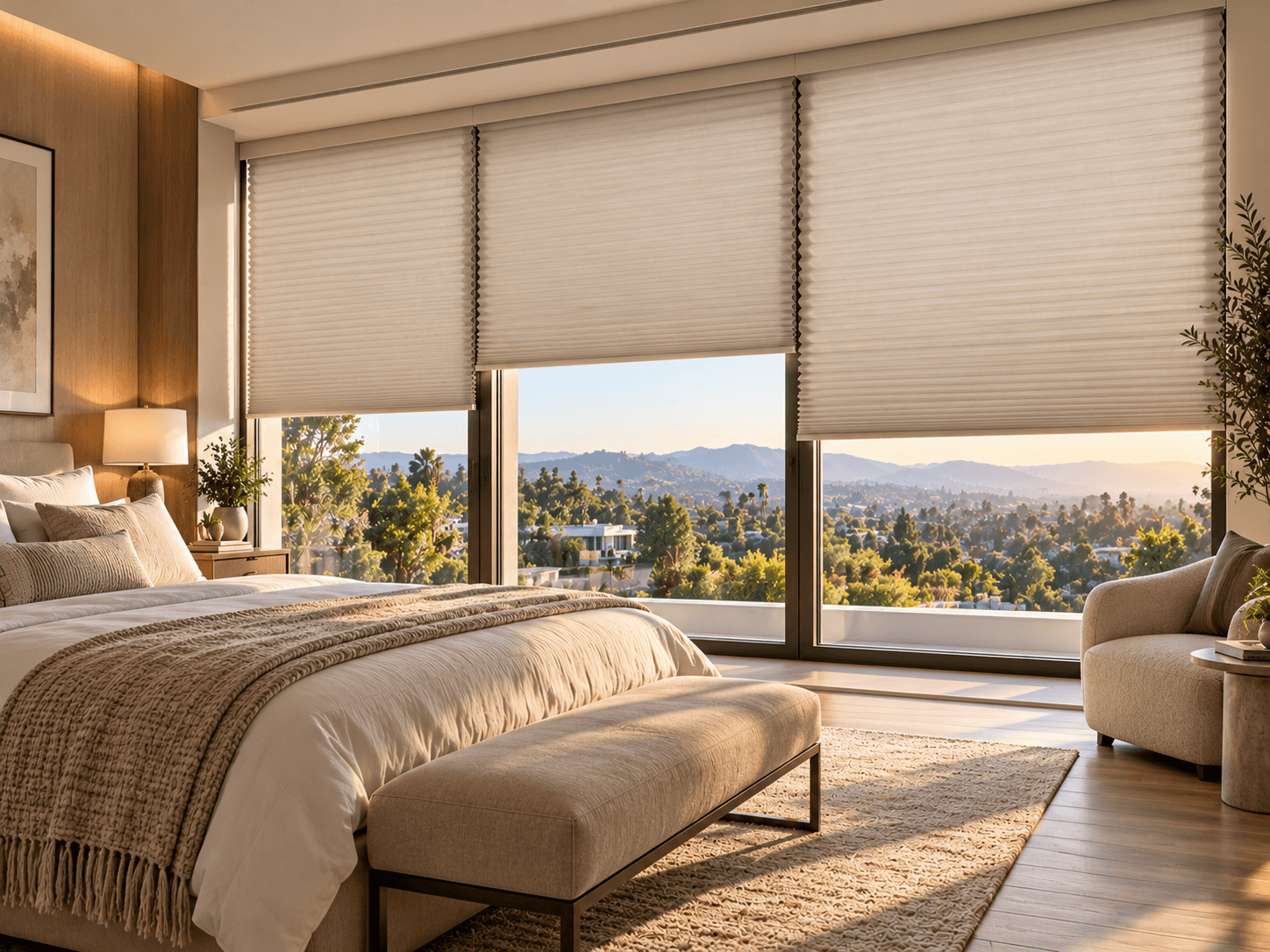
Cellular Shades
Insulating honeycomb construction for comfort and privacy.
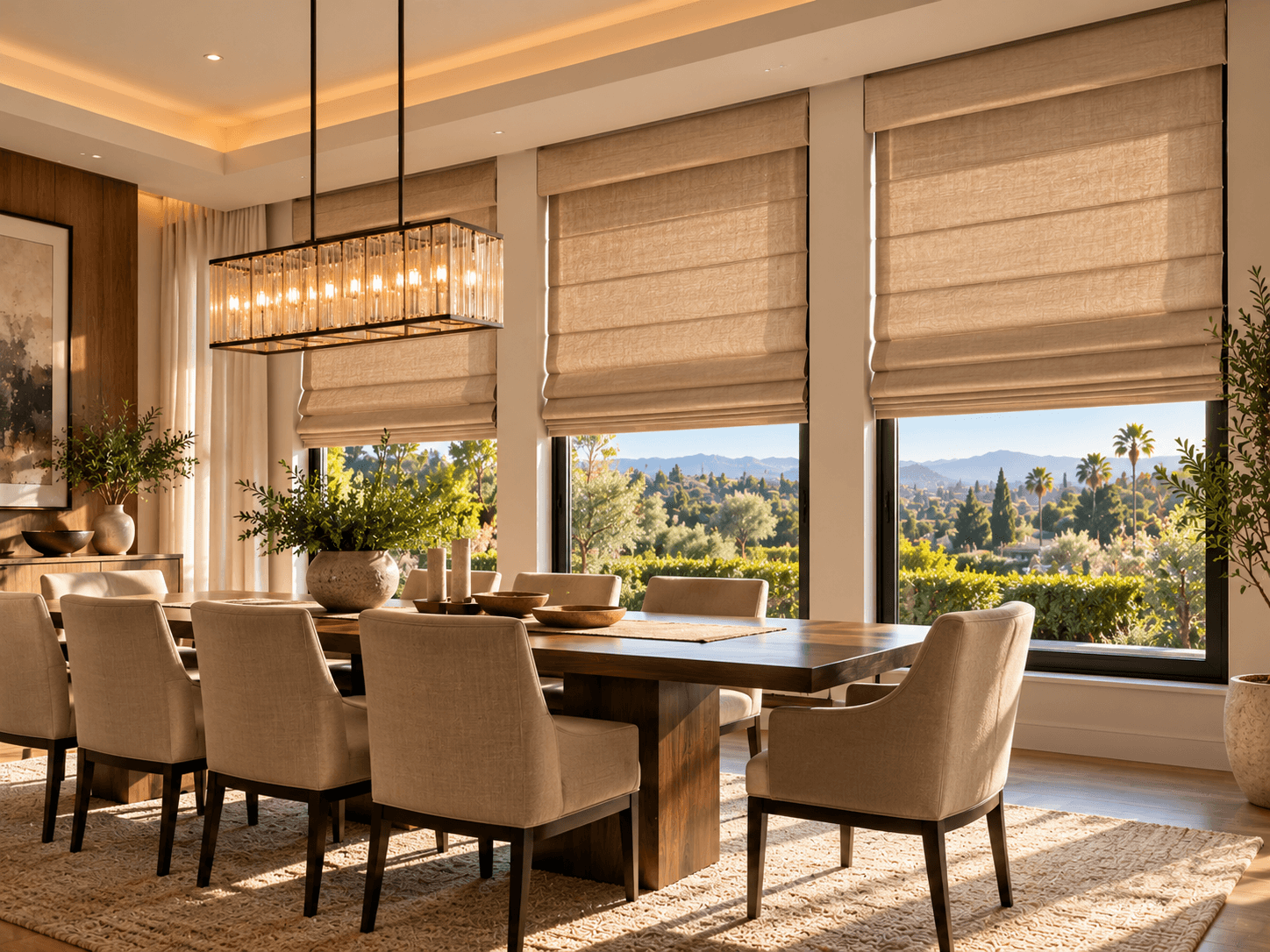
Roman Shades
Elegant fabric folds with convenient automated operation.
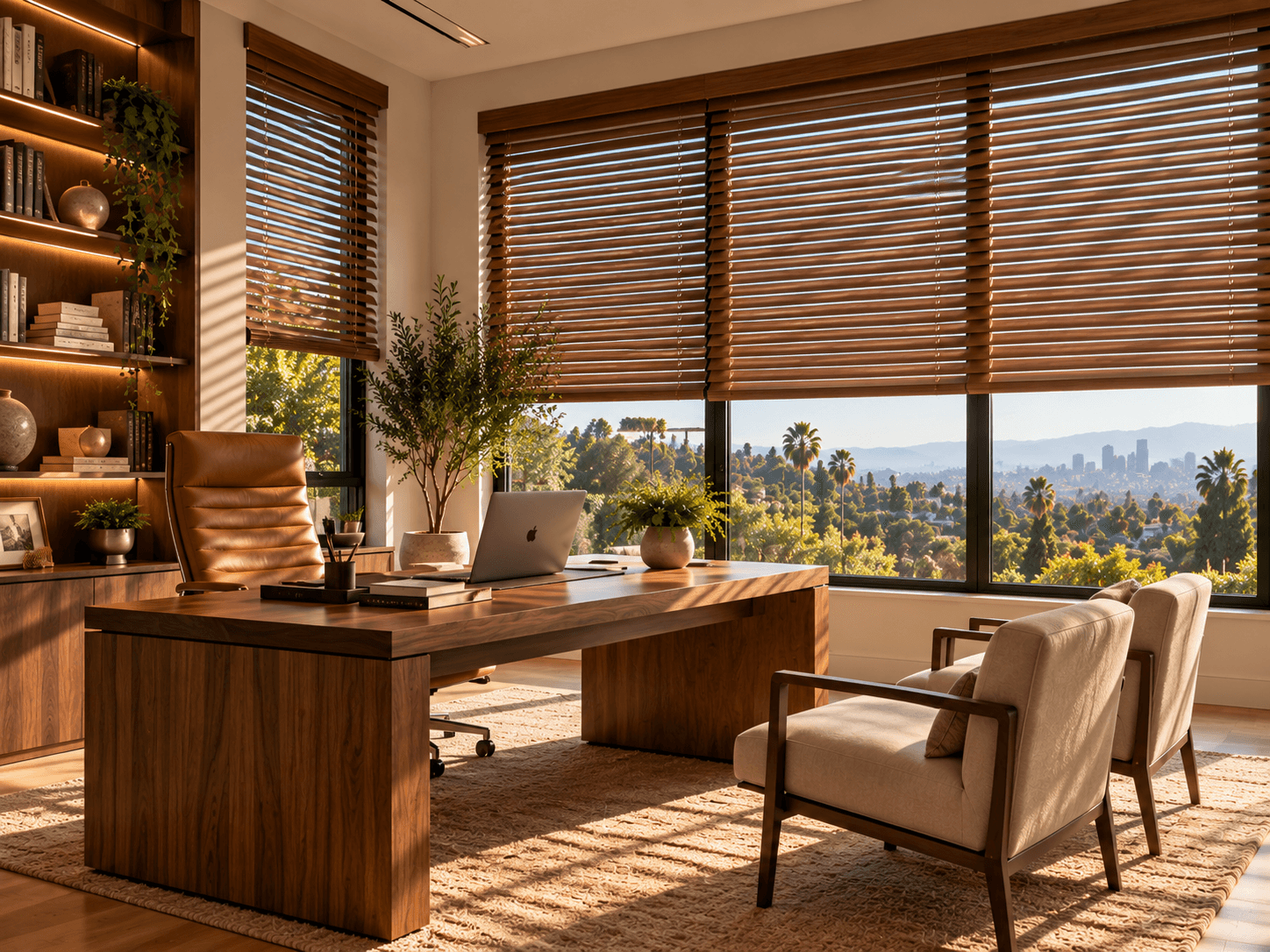
Wood Blinds
Natural wood finishes with precise light adjustment.
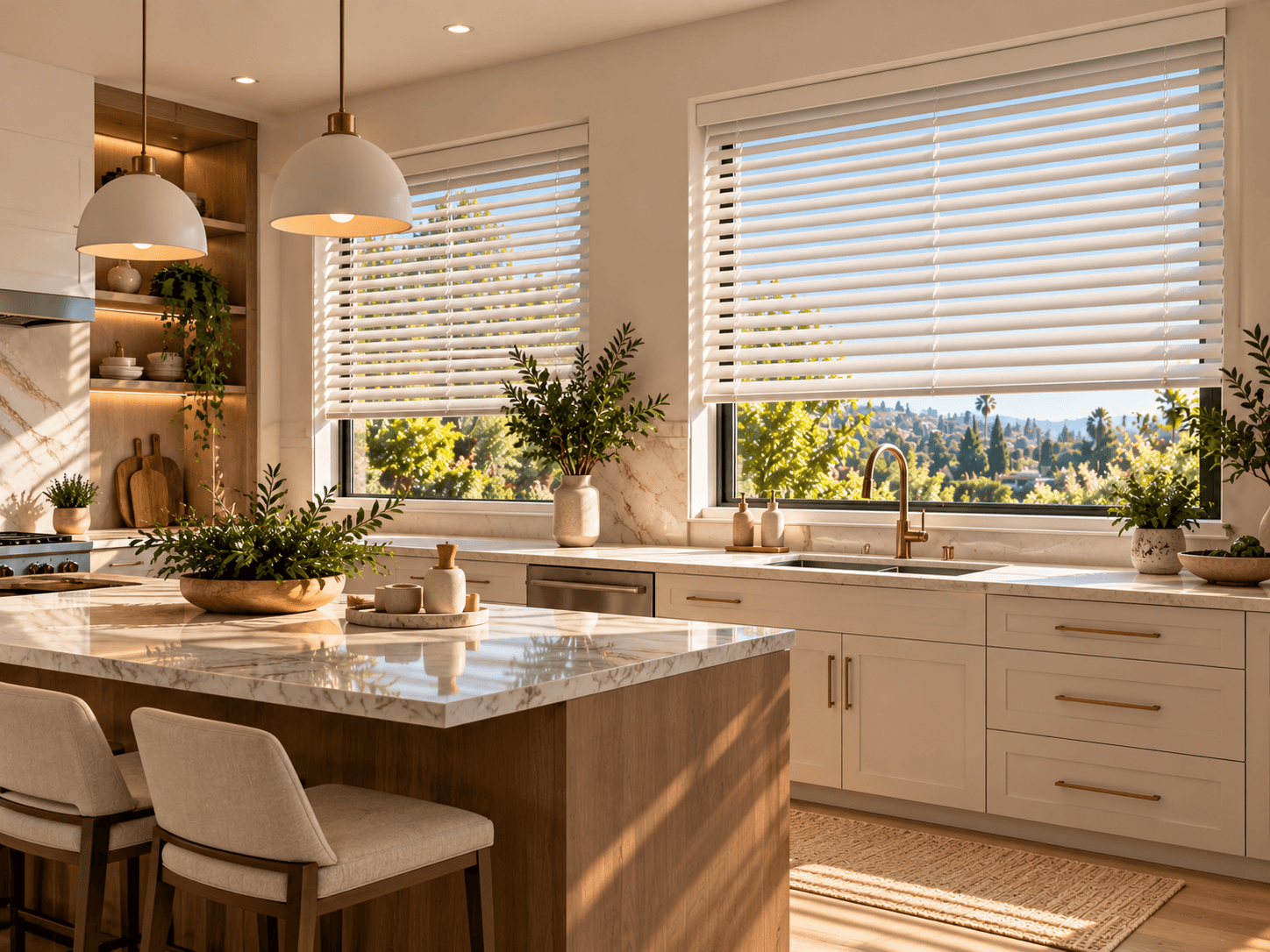
Faux Wood Blinds
Durable wood-look finishes with practical everyday performance.
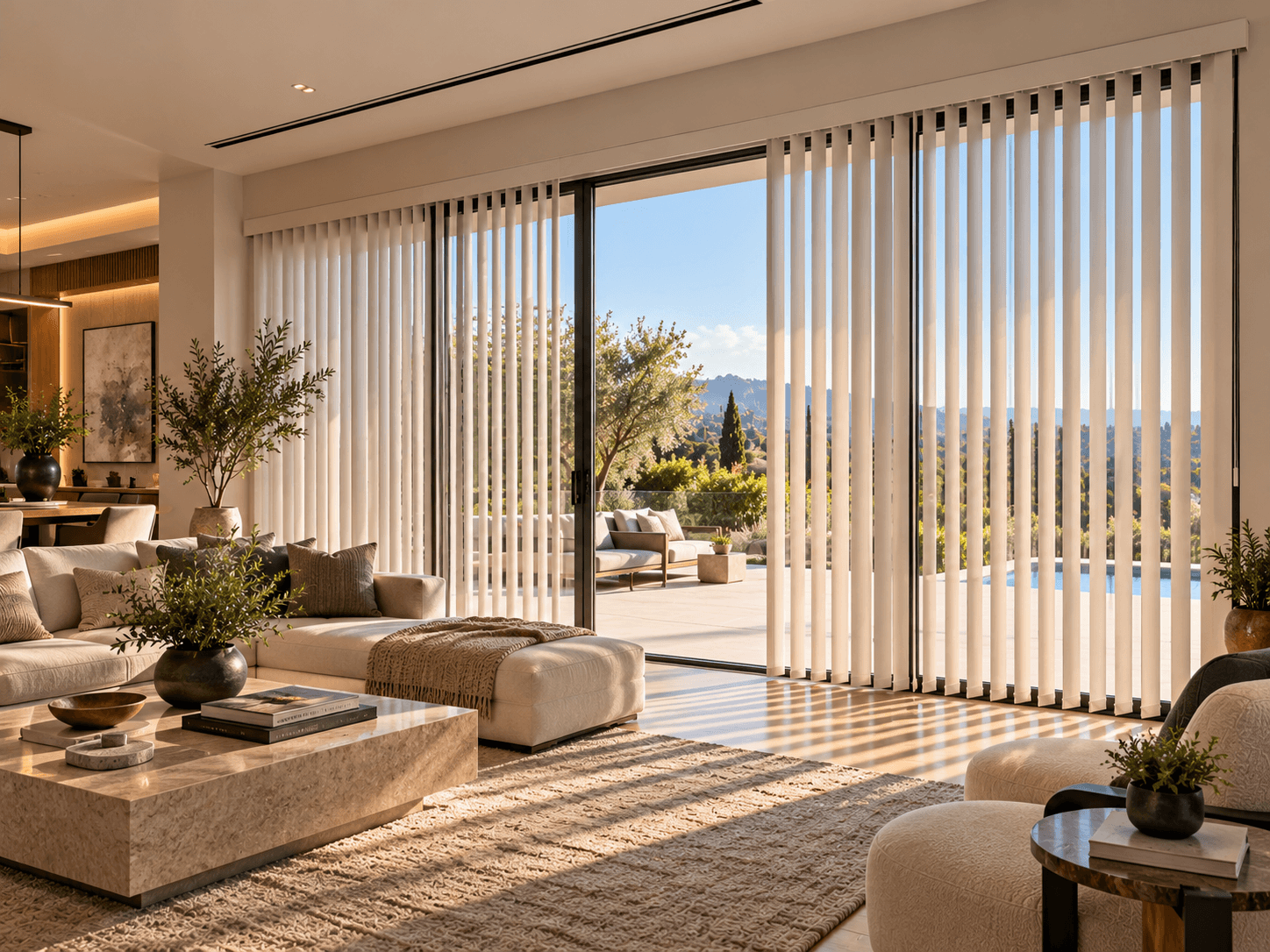
Vertical Blinds
Versatile coverage for wide windows and sliding doors.
Enjoy Natural Light With Greater Control.
Discover motorized solar shades designed to manage sunlight and glare while preserving the views and natural light you value.